
Understanding Generator Sizing: How to Choose the Right Generator for Your Facility


For industrial and commercial facilities, having a reliable backup power solution is not just a convenience—it’s a necessity. Power outages can lead to downtime, lost revenue, and even safety risks. Choosing the right generator is a critical decision, and proper sizing is the first step to ensure your facility remains operational during an outage.
Why Generator Sizing Matters
A generator that is too small won’t provide sufficient power to run your essential systems, while an oversized generator can be an unnecessary expense, both in terms of initial cost and ongoing fuel consumption. Proper sizing ensures efficiency, reliability, and cost-effectiveness.
Step 1: Assess Your Power Needs
Start by identifying the equipment and systems that need backup power. Common considerations include:
Lighting and HVAC systems
Computer servers and telecommunications equipment
Industrial machinery
Refrigeration and storage units
Make a list of all essential equipment and their power ratings, typically measured in watts or kilowatts.
Step 2: Calculate Total Load
Once you’ve listed your equipment, calculate the total electrical load. There are two main components:
Running Load: The continuous power required to keep equipment operational.
Starting Load: The extra power required to start motors or heavy machinery, which can be significantly higher than the running load.
A qualified professional can help ensure your calculations include all critical factors, such as surge requirements and future expansion plans.
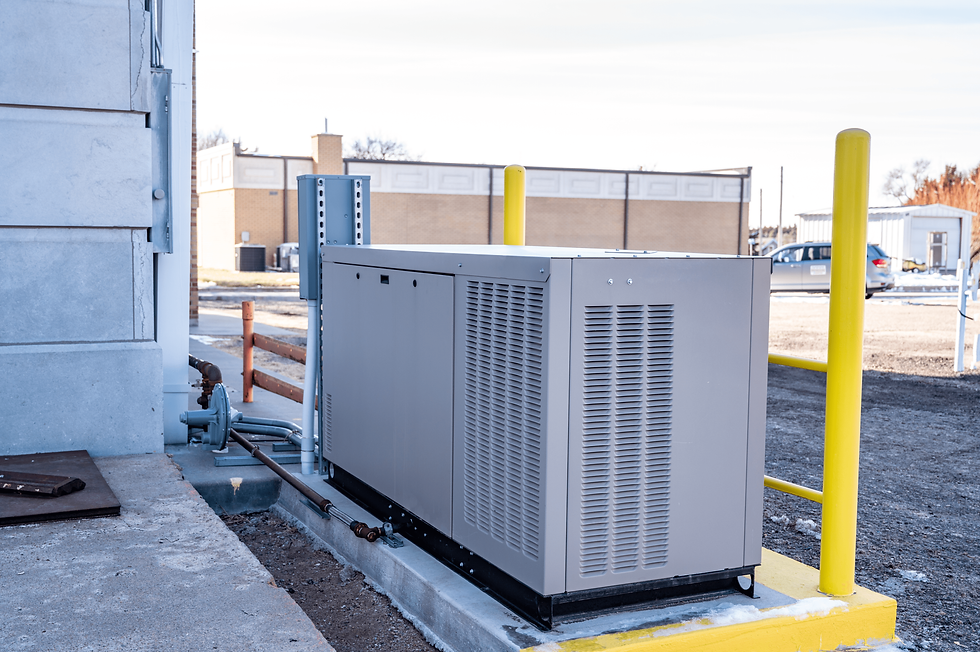
Step 3: Consider Generator Type and Fuel
For commercial and industrial facilities, diesel, natural gas, and propane generators are common. Each type has its benefits:
Diesel Generators: Durable and suitable for high-load industrial operations.
Natural Gas Generators: Cleaner and convenient if a natural gas line is already available.
Propane Generators: Good for facilities with limited space for fuel storage.
The type of generator will influence its sizing and installation requirements.
Step 4: Factor in Usage Patterns
Consider how often your generator will run and for how long. Facilities with frequent power interruptions may need a generator capable of running continuously, while others may only require emergency backup for short periods.
Step 5: Consult a Professional
Generator sizing involves technical calculations and compliance with safety standards. Partnering with experienced professionals ensures you select a generator that meets your facility’s needs while adhering to local codes and regulations.
Choosing the right generator is crucial for maintaining operations, protecting equipment, and ensuring the safety of your staff.
Contact Sparks Generators today for your consultation and let us help you select and install the perfect generator for your facility.
Comments